To import building materials from China, you need more than a supplier and a freight quote. You need products that fit the project, a clear picture of the total cost, and someone responsible for each step from approval to installation.
Direct importing can be worth investigating for a planned package of cabinets, windows, tile, furniture, or other interior products. It is harder to justify for an urgent replacement or a product you have not confirmed is suitable for its intended use. Local installation and support also need to be available.
Use this guide to decide what to source, build a supplier shortlist, and prepare for an order. The Stage Checklist brings together the records needed before a deposit, production, and shipment. Some work can proceed in parallel; a payment or production decision should reflect what has actually been settled.
Decide Which Purchases Make Sense to Import
Start with the project schedule and the consequences of a mistake. A repeat order of an approved product may be easier to plan than a custom window needed urgently to make a building weather-tight.
| Question | What the answer changes |
|---|---|
| Can you define the product and quantity well enough to compare offers? | If not, begin with selection and pricing discussions rather than a production order. |
| Can the required compliance and installation information be verified? | An unresolved requirement can make the product unusable, regardless of its price. |
| Does the schedule allow for approvals, production, transport, clearance, and a delay? | Compare the full sequence with the date the installer needs the goods. |
| Who can receive, store, install, and service the product? | Include these tasks in the purchasing decision instead of assuming a local contractor will take them on. |
| Is the total cost still attractive after freight and destination expenses? | A factory price alone cannot answer whether importing is worthwhile. |
Work backward from the date the installer needs the goods. Identify the required site-delivery date, time for shipping and clearance, goods-ready date, and final approval date. Ask whether the quoted production time starts after a deposit, drawing approval, or both.
You can import part of a project and buy the rest locally. For example, it may be worth comparing imported and local options for a planned cabinetry package while buying a small, time-critical replacement nearby. Treat that as a product-by-product decision, not a commitment to source the entire building overseas.
Choose How You Will Buy
Start with a short material list: product categories, approximate quantities, intended use, destination, and target dates. It gives potential suppliers enough context to discuss suitability before you develop a detailed request for quotation.
Where to Find Potential Suppliers in China
Online directories and marketplaces such as Alibaba and Made-in-China can help you find companies and compare advertised ranges. Treat a listing as a lead to investigate. Ask which products the company makes or sources, and request information for your proposed order rather than relying on its general profile.
Trade fairs, specialist markets, showrooms, and referrals offer other starting points. A visit lets you compare visible products and finishes, but the business selling a showroom item may differ from the factory making your order. Keep the product reference and seller's details together so you can follow up on the same item.
Build a shortlist around the categories, quantities, customization, and destination documents you need. Ask each candidate to respond to the same initial brief. A supplier that can offer your preferred finish but cannot provide the required product information has not yet answered the whole brief.
You do not have to travel to start this process. Documents, samples, and remote discussions can narrow the options; any factory visit, audit, or independent inspection should have a defined task. None of these activities replaces checking the actual product and the terms of your order.
Compare the Buying Arrangements
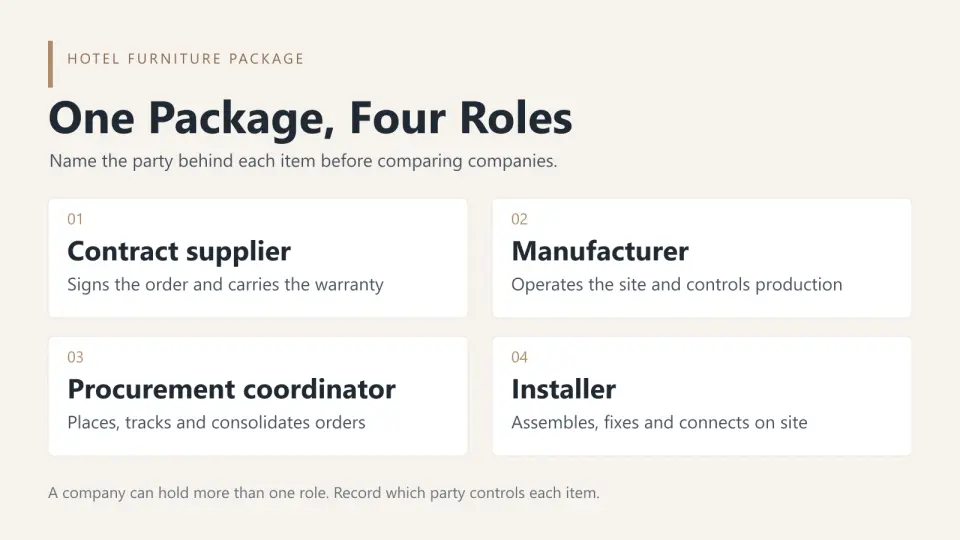
You may buy from individual manufacturers or through a trading company, sourcing agent, or supplier that coordinates several categories. These arrangements can overlap; establish who sells the goods and which coordination tasks each party will handle.
Working with a factory lets you discuss its product with the manufacturer. With several factories, you also need a way to coordinate samples, payment dates, inspections, deliveries to the warehouse, and missing items.
An intermediary or coordinating supplier can take on some of that work, but the scope matters. Ask who sells the goods, who issues the invoice, who handles quality questions, and who arranges shipment. A showroom visit or a factory introduction does not answer those questions.
A single-category order and a package of cabinets, tile, and lighting create different coordination tasks. The second needs someone to track separate approvals and completion dates, then arrange consolidation: bringing goods from several sources together for a shipment. One contact can coordinate that work, but the buyer still needs to know who approves product changes and shipment.
Before sending a deposit:
-
Obtain the seller’s business-registration details and compare its legal name with the quotation and order.
-
Ask whether it makes the quoted products or buys them from other factories. If a different company will receive payment or issue export documents, resolve that arrangement before paying.
-
Check that the payment instructions match the agreed transaction. Verify a change of bank details through a previously established contact.
-
Ask which production, inspection, and after-sales tasks are included and which require another party.
George’s Sourcing and Project Coordination Services explain the support available for a combined order. Your quotation should identify which services are included.
Turn the Product List into Something Suppliers Can Price
A useful request for quotation gives each supplier the same starting point. You can begin with incomplete information, but distinguish a requirement from a choice that is still open.
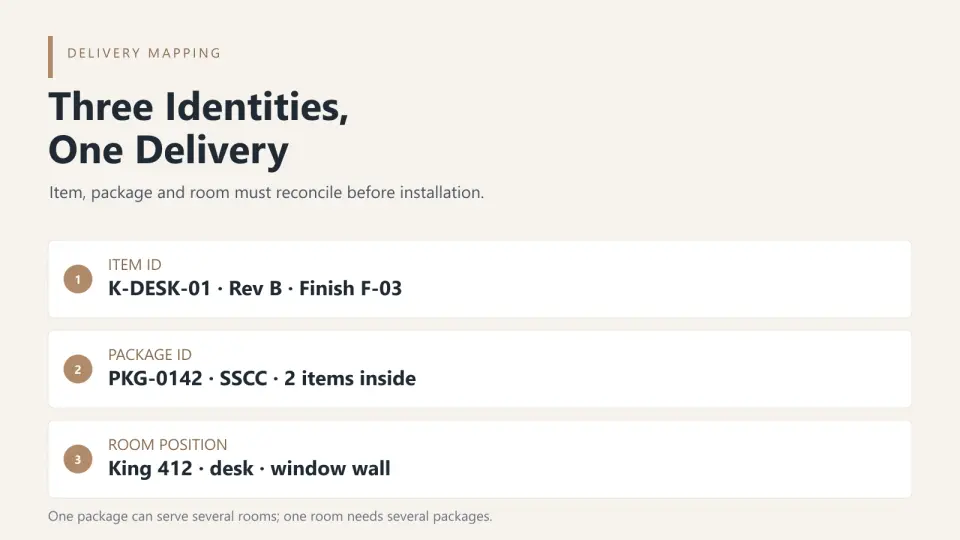
Give every item a reference and a location. Then record the quantity, unit, dimensions, proposed material, finish, accessories, and questions that affect price.
For example, “20 bathroom vanities” leaves room for very different offers. A more useful line identifies the vanity size, cabinet material, door finish, countertop, basin, hardware, and whether the faucet is included. If the countertop is undecided, show it as a separate option rather than letting each bidder choose one silently.
The following fictional inquiry record shows how to separate a defined requirement from an open choice. Its dimensions illustrate recordkeeping, not a recommended vanity size.
| Inquiry field | Example entry |
|---|---|
| Item, location, and quantity | V-01; bathrooms B01–B20; 20 identical cabinet units. |
| Cabinet-body dimensions | 900 mm wide × 480 mm deep × 700 mm high; countertop and basin are outside these dimensions. |
| Construction and finish | Supplier to propose panel type and thickness; pale wood-grain finish reference F-03. Both remain subject to approval. |
| Included and excluded products | Price cabinet, doors, and identified hardware; exclude countertop, basin, and faucet. |
| Options still required | Identify the proposed hinge model and price any alternative separately. |
| Delivery and timing | State packing and delivery to the named collection warehouse separately; confirm the production-start conditions. |
This gives suppliers a common scope for initial proposals while keeping open choices visible. Different proposed constructions or hardware still need review before a final price comparison. Once the choices are settled, record the approved specification and drawing revision before releasing production. Keep V-01 as the item reference so later records still point to the same purchase.
For Kitchen Cabinets and Wardrobes, separate cabinet boxes, door fronts, exposed panels, hardware, and any countertop or appliance allowance. For windows, record openings, operating type, glass configuration, and the performance information required by the project.
Check units as carefully as descriptions. A price per square meter, carton, piece, or set cannot be compared until you know what quantity each unit covers. Keep the same item references through quotations, drawings, approvals, and packing lists.
Check Destination Requirements Before Committing
The product needs to satisfy both import requirements and the requirements for its intended use. Customs clearance does not establish that a window, electrical fitting, or plumbing fixture is suitable for installation in your building.
Ask the architect, engineer, installer, or other professional responsible for the product’s use which requirements and documents apply. Check each document against the exact product, model, and configuration being quoted. A report for a different series or a supplier’s general assurance may not answer the project’s question.
For a U.S.-bound order, ask a licensed customs broker to check the product’s tariff classification, country of origin, and duties or additional import charges that may apply. Ask about required documents and any advance filings: information that must be submitted by a deadline before loading or arrival. Establish who submits it and when they need the supplier’s information.
The importer of record is the party responsible for the import entry. Using a broker does not remove that party’s responsibility for accurate entry documents and payment of applicable duties, taxes, and fees.
Some products also bring requirements beyond customs. Composite-wood products, including certain finished goods containing those panels, may be subject to formaldehyde emission limits and related labeling and documentation requirements in the United States. Establish what applies to the proposed product rather than treating a familiar certification logo as sufficient.
This review should happen while you can still change the selection. Do not assume a quoted duty rate, certificate, or approval applies to every destination or every item in the container.
Compare the Cost of the Same Order
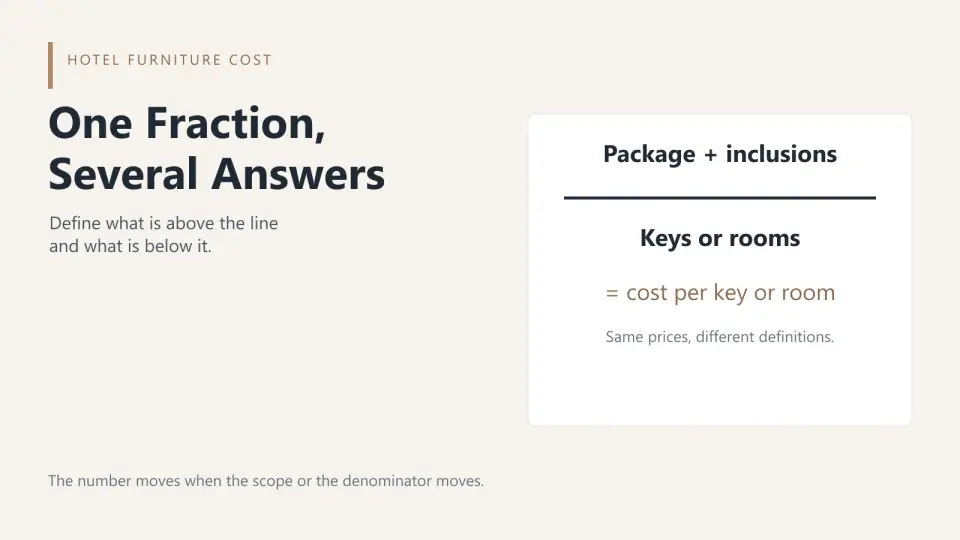
Ask each seller to identify the goods price and the services or charges included with it. Separate the cost of getting goods to the destination from the cost of installing them.
A working budget may need to account for:
-
Products, accessories, samples, and any agreed drawing or development work.
-
Inspection, export packing, collection, and consolidation.
-
International freight and any cargo insurance.
-
Import duties, taxes, brokerage, and destination handling.
-
Local delivery, unloading, storage, and installation.
Not every charge applies to every purchase. The point is to find out which costs are included, estimated, excluded, or still unknown—and to avoid adding a charge twice.
For a fictional comparison, assume a local offer is $12,000 delivered and unloaded at the job site. An imported offer for the same products is $8,000, with another $2,500 estimated for packing, inspection, freight, insurance, import charges, and delivery to that site. All amounts are in U.S. dollars, and both options exclude installation.
The import planning subtotal is $8,000 + $2,500 = $10,500, but unloading remains unquoted. The apparent $1,500 difference is not a confirmed saving: the missing charge and changes to the estimates can reduce or remove it. Compare the completed import budget with the local offer, not the $8,000 goods price. These figures are illustrative, not George prices or market estimates.
Agree on a delivery term that states how transport costs and risks are divided between buyer and seller. Incoterms rules are one way to define those responsibilities. If you use one, record the rule, its named place or port, and the version. These rules do not replace agreement on specifications, payment timing, ownership, warranty, or remedies for a faulty or late order.
A quote marked “shipping included” still needs an endpoint. Delivery to a port, a warehouse, and your job site are different offers. Confirm what happens after arrival, including access, unloading equipment, and who pays if the goods cannot be received as planned.
Use the Building Materials Quote Comparison Worksheet when offers contain different configurations or delivery terms. Keep unknown costs visible instead of entering zero to produce a neat total.
Put the Order and Payment Conditions in Writing
Before a deposit, bring the accepted quotation and its supporting records together. Include item references, quantities and units, included accessories, exclusions, and the specifications or drawing versions agreed so far. Record which selections are still open and how they will be approved.
Check the minimum order quantity for each item or finish, the quotation's currency and validity, and the payment milestones. A minimum quantity for one finish is different from a minimum total order value. Likewise, a production period beginning after final drawings are approved is different from one beginning when the deposit arrives.
Connect payment milestones with the checks agreed for the order. Record which approvals, inspection results, or corrective actions are required before the next payment or shipment. If an initial payment funds drawings or samples before the final specification is settled, state what work it authorizes and what still requires separate approval before production.
Include packing, delivery responsibilities, warranty scope, and the agreed process for changes, defects, or delays. Identify who reviews an issue, which records they need, and how the next action will be agreed. These practical records help define the purchase; the appropriate contract and dispute provisions need advice suited to the transaction.
Approve What Will Be Made
A reference photo helps communicate a design. It usually does not establish the final dimensions, construction, finish, or supplied accessories.
Before releasing a custom product for production, connect three things: the written specification, the relevant drawing revision, and the physical sample or agreed product reference. Record who approved them and what the approval covers.
A door-finish sample, for example, might confirm color and sheen without confirming the complete cabinet construction. A marked-up drawing might approve a layout while leaving hardware unresolved. Resolve those separate decisions rather than labeling the whole order “approved.”
Record changes after approval in a revised document. A small adjustment can affect adjoining products, price, and timing. Confirm the effect before the changed work proceeds.
For V-01, suppose the order specifies hinge model H-01 and the seller proposes H-02. A similar appearance does not establish the same mounting, operation, or relevant performance. Have the person responsible for the product selection assess the proposed difference and supporting information. If accepted, record the replacement and any cost or timing change, then update the order and inspection references. If rejected, keep the H-01 requirement and agree how it will be supplied before the affected work proceeds.
A visit can help when you need to compare several finishes or furniture pieces. Plan it around those decisions; the Foshan Furniture Market Guide explains how to prepare for visits and retain useful records afterward.
Agree on Inspection and Permission to Ship
Inspection should check the order you approved, not a general idea of good quality.
When planning the order, agree on the inspection stages, items to be checked, records required, and responsibility for unresolved defects. If you need independent inspection or testing, confirm who will arrange it and what it covers.
Useful checks depend on the product. They may include dimensions, visible finish, identified hardware, operation, quantities, or packing. A visual inspection cannot establish every performance claim or reveal every concealed defect.
An inspection record should connect each check with its approved reference and actual result. Suppose V-01 now has approved drawing revision C and an approved finish sample F-03. Check measured cabinet dimensions against that drawing, visible finish against that sample, and the installed hinge model against the current order. Record the agreed tolerances or acceptance criteria before checking, together with how many units will be inspected and how they will be selected.
If the report records a different hinge, identify the affected units and the proposed correction or product-change request. Record the follow-up result and obtain the decision from the person authorized by the order. A report marked complete does not resolve an open discrepancy.
Receiving an inspection report is not the same as approving shipment. If a problem is found, record the correction and identify who must accept it before the goods are dispatched. Arrange inspection early enough to resolve problems before final payment or shipment, as agreed in the order.
Plan the Container and the Receiving Work Together
Before the Goods Leave
Combining products from several factories can simplify the shipment, but their completion dates may differ. Decide what happens if one item is late: hold the full order, split the shipment, or change the sequence. Confirm the cost and schedule consequences before choosing.
For example, suppose a freight plan requires goods at the collection warehouse by June 10. Cabinets are expected on June 6, but tile will not arrive until June 17. That combined order cannot meet the June 10 cutoff. Compare a later combined shipment with sending the cabinets separately, including extra handling, storage, and the effect on site work. These are hypothetical planning dates, not standard lead times.
Track each category's approval date, production-start condition, goods-ready date, and warehouse receipt separately. A factory's completion date does not include every later collection or loading task. Review the combined plan against the site-delivery date whenever one of those dates changes.
Give the freight team package dimensions, gross weights, and handling information. A container plan has to account for the cargo’s size, weight, protection, and unloading sequence—not just whether everything appears to fit.
Ask for labels and a packing list that identify the item in each package and connect it to your order. If one cabinet ships in three cartons, the labels should make that relationship clear. Identify loose hardware and accessories too.
Before dispatch, review the commercial invoice, packing list, transport-document details, and required product documentation with the seller and freight provider. Check that the goods descriptions, quantities, package counts, weights, and shipper and consignee details correspond wherever those fields apply. The documents serve different purposes, so they need to describe the same shipment without necessarily having identical layouts or line items. This final check is separate from arranging any advance filings.
Agree on cargo insurance where needed, including the covered journey and claims process.
When the Goods Arrive
Settle the arrival plan before dispatch:
-
Who receives shipment updates and handles clearance?
-
Can the delivery vehicle reach the site?
-
Who provides unloading equipment and labor?
-
Is secure, suitable storage available?
-
Who checks quantities and visible damage, and how are problems reported?
Obtain the supplier’s claims and replacement procedure in writing. Record the evidence and reporting periods it requires, and check insurance notification requirements separately. A warranty may cover a replacement part without covering its freight, local labor, or the delay to installation.
Check the Records Before Each Commitment
Keep one current project record linking the item list, quotations, approved drawings and samples, changes, inspection results, and shipment details. Review it at each stage:
-
Before paying a deposit: Check the seller and payment details, accepted scope, destination requirements, payment milestones, and production-start conditions. Establish what the payment authorizes. Resolve questions that affect that commitment; record any selections left open and the approvals needed before production.
-
Before releasing production: For the items being released, keep the approved specifications, drawing revisions, sample or model references, and changes together. Are dimensions, construction, accessories, and required product information settled? Who approved production, and where is that approval recorded?
-
Before authorizing shipment and any payment tied to it: Review inspection results, corrections, and accepted deviations with the authorized person. Check packing information and required documents, and arrange filings, freight, insurance, and destination responsibilities as agreed. Record the shipment decision.
-
Before receiving the goods: Keep the current packing list, delivery and unloading arrangements, and claims contacts and reporting requirements ready. Identify who checks quantities and damage, where goods will be stored, and who handles missing items or installation questions.
For any unresolved item, record the question, the person handling it, and the decision needed before the affected work or payment proceeds. For example: “V-01 hinge H-02 proposed; product reviewer to assess the mounting and supporting information before that substitution is released.” This makes the next action visible without treating the whole order as either approved or unapproved.
What to Send When You Are Ready to Discuss a Project
You do not need a finished specification to start an inquiry. Send the information available: product categories, approximate quantities, drawings or dimensions, destination, and target dates. Say which decisions still need help.
George can review your project information and identify what is needed next. When you Request a Project Quote, say whether you need an early budget estimate or a quote for products whose specifications are already settled.