Buying kitchen cabinets from China starts with defining the order you want made. Give suppliers the same cabinet list, drawings, materials, hardware and delivery scope. Then connect the selected offer to approved samples, production drawings and a plan for receiving and installation.
An attractive factory price is only one part of that decision. A filler is a panel that closes a gap beside a cabinet. A missing filler, an incorrect appliance opening or a replacement front can delay the kitchen even when the shipment arrives on time.
Decide Whether Importing Fits the Project
Importing is worth evaluating when you can settle the specification before production and have a local team to verify the room and install the cabinets. Repeated layouts can make one reviewed configuration useful across several kitchens, provided each room's exceptions remain visible.
A single custom kitchen can also be considered. The question is whether its design choices and complete delivered cost justify samples, technical coordination and international handling. There is no universal minimum order or guaranteed saving.
A locally available option may fit better when you need an immediate replacement, cannot verify the room, or have no workable plan for assembly and installation. Compare that option before paying for detailed development of an import order.
For the example throughout this guide, assume a project has 12 apartments using kitchen type K-A. These are invented planning references, not a George order. Each apartment needs eight cabinet units, giving 12 × 8 = 96 cabinets. Appliances and locally fabricated countertops are outside the cabinet supply. Fillers and exposed end panels need separate quantities; they are not extra cabinet units.
Give Every Supplier the Same Order Basis
A Cabinet Schedule is the unit list. It connects each cabinet ID to its size, configuration and quantity. A plan shows its position from above; an elevation shows the fronts and their heights. Record the current revision of each drawing.
For K-A, the buyer issues one schedule and drawing set to all bidders. The eight units include a sink cabinet, drawer bases, wall cabinets and tall storage. A dishwasher space is an opening in the layout, not a ninth cabinet. If a bidder includes a surrounding panel there, that panel must appear as a separate item.
Keep the main choices explicit:
| Order input | What must remain the same between offers |
|---|---|
| Cabinet IDs and quantities | Eight units per K-A kitchen; 12 kitchens; exceptions listed by apartment |
| Dimensions and construction | Cabinet Dimensions, framed or frameless construction, front arrangement and visible ends |
| Component materials | Boxes, backs, shelves, drawer parts and fronts identified separately |
| Finish and hardware | Finish references, hinge and runner models, handles and interior fittings |
| Appliance and site interfaces | Exact appliance documents, service positions, fillers and countertop responsibilities |
| Delivery format | Ready to assemble or assembled; loose parts and local work identified |
Use the Cabinet Material Guide to build the component specification. The Framed and Frameless Comparison addresses openings and hardware. Those choices need drawings and component details, rather than a broad label such as “premium plywood kitchen.”
If a material or fitting is still undecided, ask bidders to show the proposed option and its price separately. An unnamed substitute must not become the common specification simply because it appears in the lowest offer.
Ask for Evidence That Matches the Proposed Cabinets
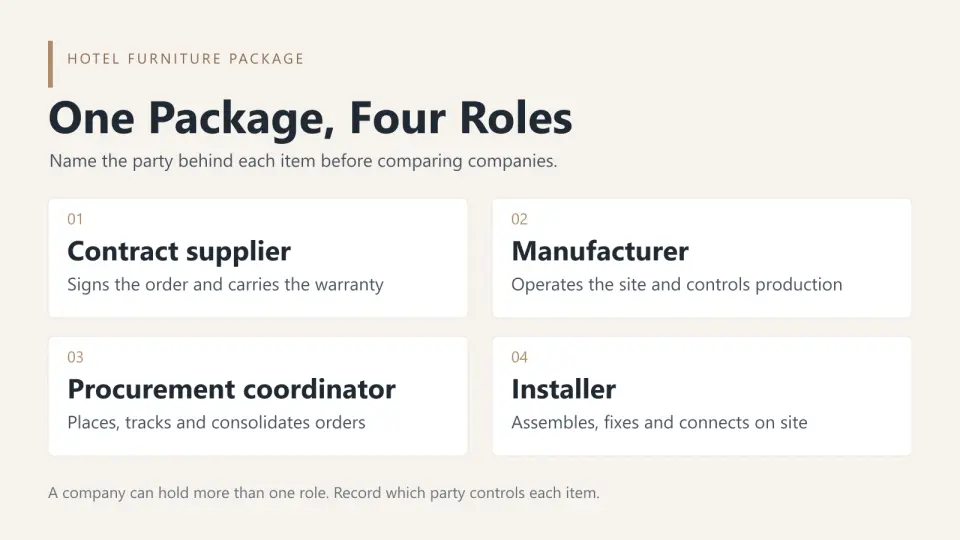
Establish the seller's legal identity, the production location and who is responsible for subcontracted work. A factory, trading company or sourcing coordinator can have a role in the order; the contract needs to identify the party accountable to you.
Ask for evidence against a specific question:
| Question | Useful evidence | What it does not establish |
|---|---|---|
| Can the supplier make this configuration? | Relevant drawings, a comparable sample assembly and identified production processes | That every catalog option is available for this order |
| What materials and fittings are proposed? | Component schedule, product identities and supporting technical records | That a similar-looking sample uses the same concealed parts |
| Does a report cover a requirement? | Report subject, configuration, date, method and result matched to the proposed product | Approval for a different material, model or destination |
| Can the order fit the schedule? | Written milestones tied to approvals, procurement and the production slot | A guaranteed site arrival based on production time alone |
A photograph can help review visible finish and arrangement. It cannot prove a concealed panel grade, hardware load rating or destination compliance. If the evidence does not match the proposed configuration, keep that requirement unresolved and name who will obtain the missing record.
Approve Samples and Drawings for Different Purposes
A finish sample can settle color, texture and sheen. It does not settle cabinet dimensions. A layout approval can settle positions without proving that an appliance fits. Record what each approval covers.
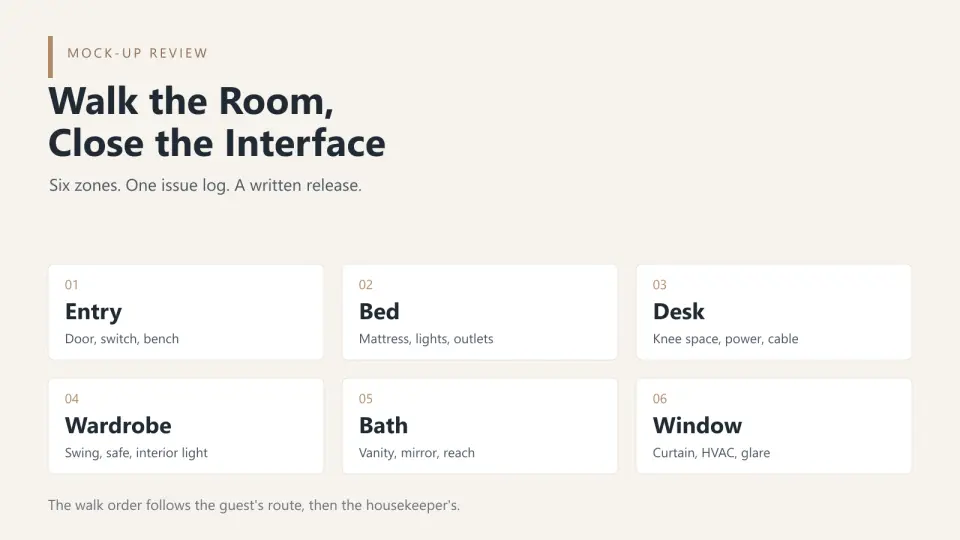
For the K-A example, suppose the buyer accepts finish sample FIN-01, but the dishwasher model is still undecided. The drawing can remain suitable for budget pricing while the adjacent panel and appliance opening are marked not released for manufacture. The project coordinator obtains the selected model's installation document. The cabinet supplier revises the affected drawing, and the local installer reviews the fit before the buyer authorizes production.
Before production, reconcile:
-
Final site measurements and the finished wall and floor surfaces used as measurement references.
-
Cabinet IDs, quantities and the current drawing revision.
-
Component materials, finish samples and hardware configurations.
-
Appliance openings, service routes and door or drawer movement.
-
Fillers, exposed ends, Countertop Interfaces and installation responsibilities.
-
Remaining exceptions, the authorized approver and the decision to release or hold the order.
Changes after approval need an affected-cabinet list, revised documents and a written effect on cost and timing. Do not let a changed handle, thicker front or replacement appliance remain only in a message thread.
The Cabinet Quality Checklist separates specification approval from checks on manufactured pieces and shipment release. Agree on acceptance criteria, checking scope and issue closure before those checks occur.
Compare Costs to the Same Finished Stage
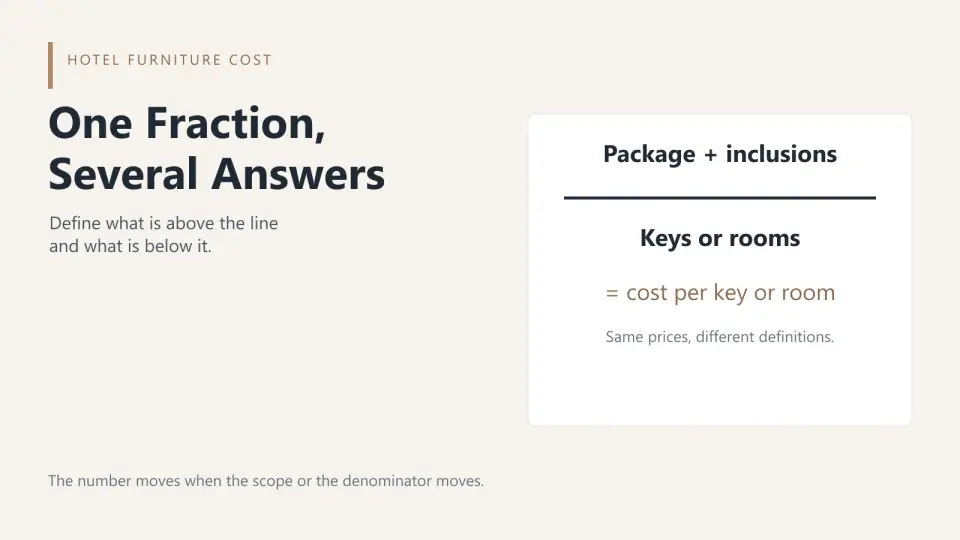
Request an Itemized Cabinet Offer against the common schedule. Include matching ends, fillers, toe-kick covers, handles and fittings. List countertops, sinks and appliances separately so their presence or absence is clear.
State where the quoted delivery ends. For packing, collection, freight, insurance, import charges, local transport, unloading, assembly and installation, mark each applicable cost as included, separately priced or unknown. Record who arranges and pays for each item. A delivered-to-port quote cannot be compared directly with an installed kitchen price.
For K-A, both cabinet offers exclude the local countertops. The buyer still needs a countertop budget and a contractor responsible for measurement, fabrication and installation. Excluding that work from the supplier's offer does not remove it from the project.
Use the Quote Comparison Worksheet for currencies, quoted additions, estimates and unknown charges. Keep unknown amounts visible; they do not count as zero.
For a U.S. destination, wooden cabinets, vanities and certain components from China are subject to antidumping and countervailing duty orders. These measures can add import charges. Ask the responsible customs professional to check the actual product, origin, producer or exporter, entry date and applicable measures before relying on an import budget. A general notice does not determine whether a particular George item is covered or what rate applies. Other destinations need their own review.
The purchase agreement should also define payment milestones, change approval, inspection access, claim procedures and remedies. Record who pays to ship replacement parts and carry out any agreed repairs or refitting at the site. A promise to supply a replacement part leaves a cost gap if nobody has agreed how it reaches and is fitted at the site.
Plan Production, Shipping and Receiving as Separate Stages
Ask for dates linked to events: final drawing approval, sample approval, material availability, production completion, inspection, packing and dispatch. Add the freight provider's current transit and destination arrangements. Work backward from when the installer needs the cabinets, rather than treating a factory completion date as a site delivery date.
Choose RTA or Assembled Delivery with the receiving team. RTA means ready to assemble. It adds assembly work before installation; assembled boxes still need positioning, securing and finishing at the site.
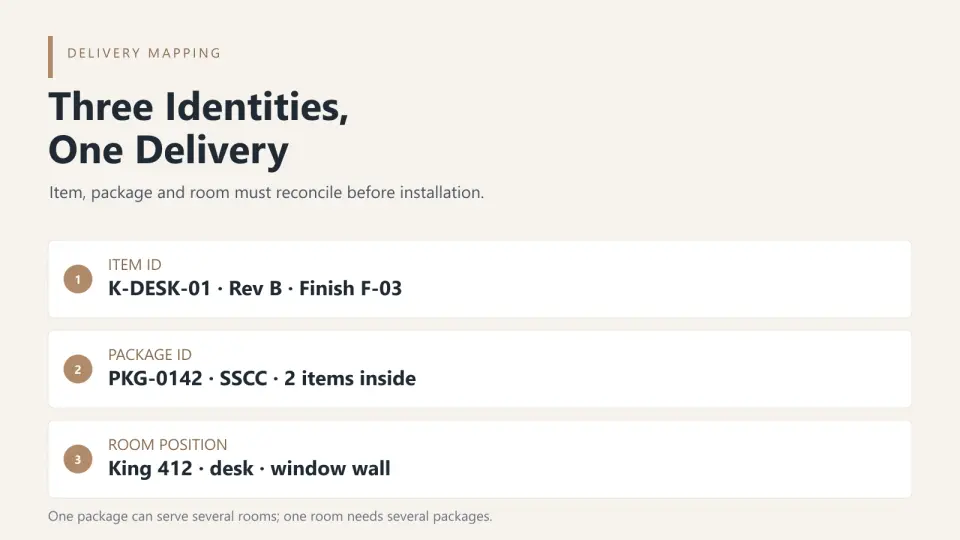
In the K-A example, package labels should connect the apartment, cabinet ID and part to the packing list. Ninety-six cabinets do not imply 96 cartons. One unit may span several packages, and loose fittings may serve several units.
Before dispatch, send the check results and open issues to the person authorized to release the shipment. At arrival, match package counts to the packing list and record visible condition. Then check unpacked components against the cabinet list. Preserve labels, part references and photographs for shortages or damage. Follow the agreed reporting procedure before modifying an affected part.
Prepare a Cabinet Project Inquiry
Review Cabinetry and Wardrobe for the category and order inputs. When you Discuss a Cabinet Project, include the layout or cabinet list, kitchen and unit quantities, appliance models or unresolved interfaces, destination and required dates.
State which dimensions are site-verified and which are still preliminary. That lets the first discussion distinguish a budget proposal from the drawings and selections needed before production.